
Steam Brush vs Flat Iron vs Hot-Air Brush: Which One Fits Your Hair Type?
 By Ashley Rubell Published Updated
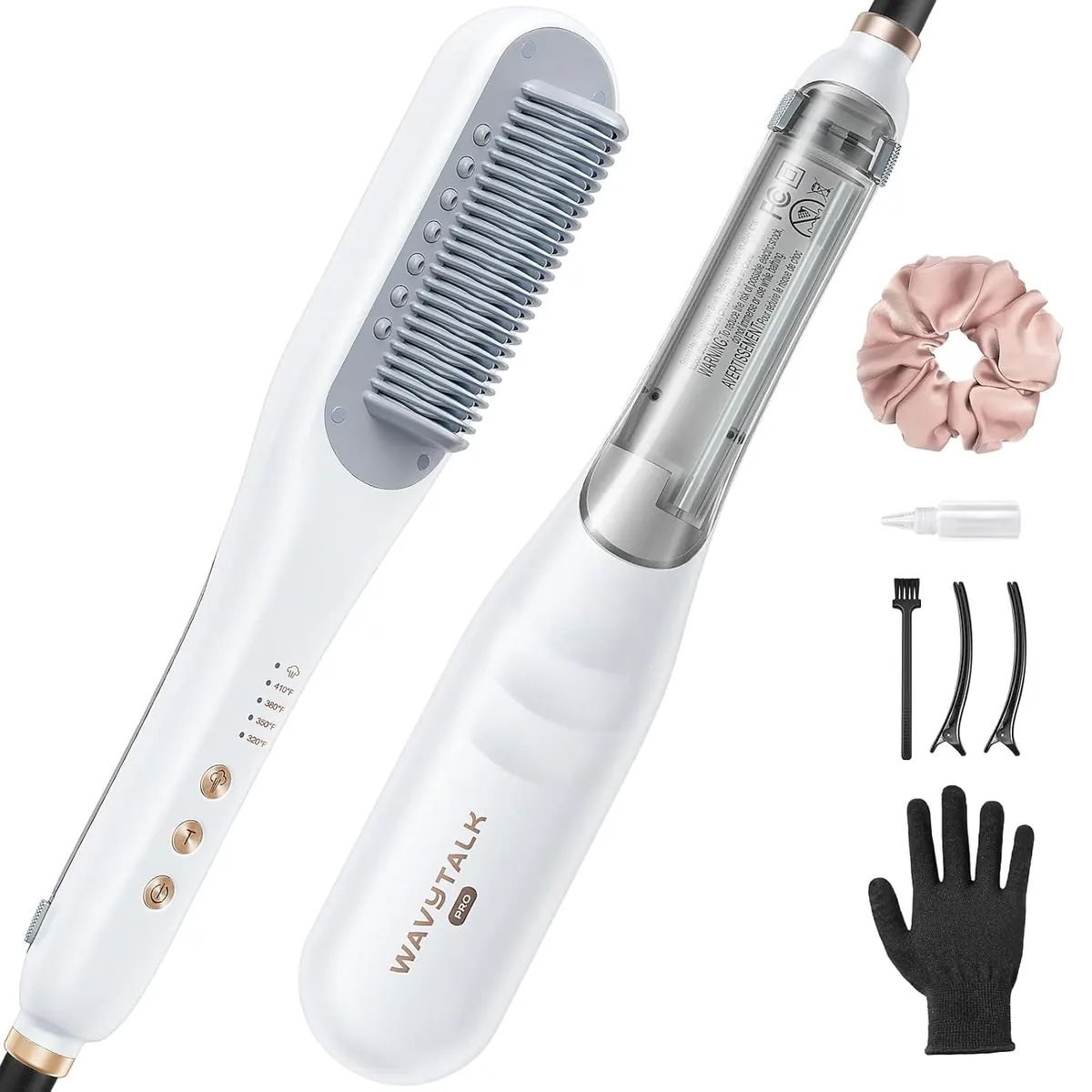
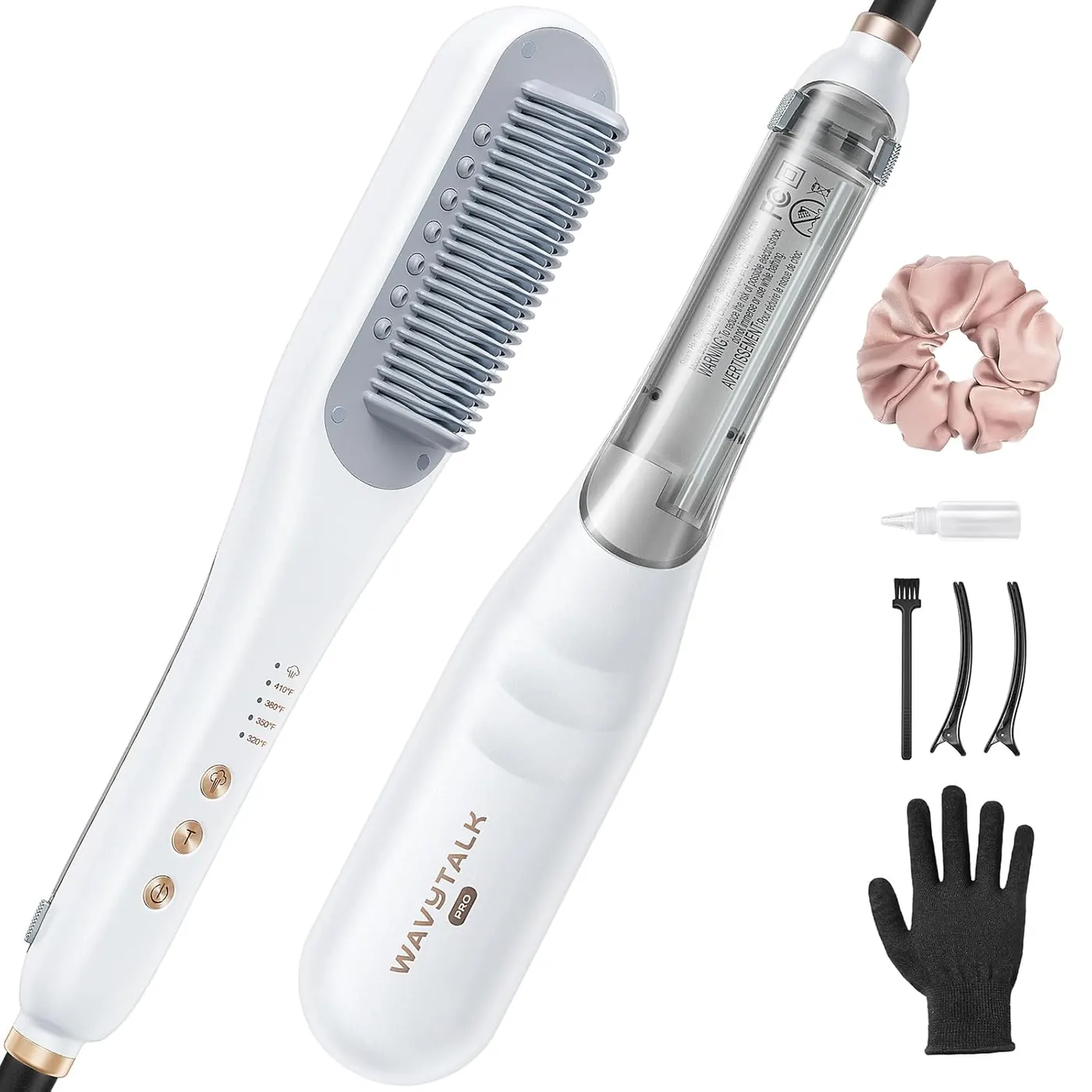
A hot-air brush, a steam straightener brush and a flat iron can all end with smoother hair, so they often land in the same shopping cart. They are not three versions of one tool. Each one is built for hair in a different state: a hot-air brush dries and shapes wet hair, while a steam brush and a flat iron smooth hair that is already dry. Get that one point right and the rest of the choice gets much simpler.
This guide starts with that wet-or-dry question, backed by what dermatologists and hair researchers have published. Then it works through hair types one at a time, from fine and straight to thick, curly, coily and short, and points to the Wavytalk tools that match. Every spec below is Wavytalk's published figure, and every general hair fact comes from a source named in the text.
First question: is your hair wet or dry?
This matters more than plate material or wattage.
- Wet or damp hair needs airflow. That is the job of a dryer or a hot-air brush. A hot-air brush blows warm air through a barrel, so you dry and shape each section at the same time.
- Dry hair can take direct heat. Flat irons and heated brushes press hot surfaces against the hair. Per the American Academy of Dermatology (AAD), flat irons should be used on dry hair, on a low or medium heat setting, and no more often than every other day.
The reason is physical, not just a styling preference. When hair is wet, water sits inside the fiber. Dermatologists at the University of Bologna note that a wet hair fiber can swell by up to 30% in diameter. When high heat hits that trapped water, it can turn to steam inside the shaft and leave air pockets, a condition called "bubble hair." The same authors link it to damp hair being exposed to temperatures above about 125°C (257°F) from dryers or curling tools. A published case report in the International Journal of Trichology describes bubble hair in a patient who had used a hot iron on wet hair only twice.
Air-drying isn't automatically the gentle option, either. In a 2011 Annals of Dermatology study, hair tresses were washed and dried 30 times. A dryer held about 15 cm (6 inches) away and kept moving did less overall damage than natural drying. The dryer caused some surface wear, but the air-dried tresses, which stayed wet for more than two hours, were the only ones with damage to the cell membrane complex, the lipid layer that binds hair cells together. Drying from 5 cm away (about 95°C at the hair) caused the worst cuticle damage. Moderate, moving heat beat both extremes.
Rule of thumb: dry first with airflow, then smooth with plates or a heated brush.
The three tools side by side
Swipe sideways to see the whole table →
| Hot-air brush | Steam straightener brush | Flat iron | |
|---|---|---|---|
| Hair state | Wet or damp | Dry (direct heat) | Dry (direct heat) |
| How it works | Warm airflow through a heated barrel | Heated ceramic comb teeth plus a fine mist | Two heated plates clamp and glide |
| Main result | Dried hair with a blowout-style finish | Smoothing and straightening while combing through | Sleek, straight hair, and curls if the plates have round edges |
| Best-matched hair | Short to shoulder-length, travel days | Curly, coily or thick hair aiming for a silk-press look | Most hair types; plate width is what changes |
| Wavytalk example | Dual Voltage Jet Dryer Brush | Steamline Pro Straightener Brush | Titanium Flat Iron (1") |
| Published heat | Three settings, up to about 195°F; about 600W | Four settings, about 325°F–410°F | LCD-set, about 170°F–450°F; presets 270/350/410°F |
| Water tank | No | Yes: refill and clean the teeth | No |
Note the difference in scale. The hot-air brush tops out around 195°F, while the two dry-hair tools run more than twice as hot and press directly on the hair. Keep that in mind when a routine combines them.
Match the tool to your hair type
The AAD's general advice applies to every hair type: use low or medium heat, use a heat-protecting product, and keep contact time short. Beyond that, these are the points where hair type changes the decision.
Fine or straight hair
With fine hair, the most useful feature is a heat dial that starts low, so you can follow the AAD's low-to-medium advice without guessing. The Titanium Flat Iron is the best match in the range on that point: Wavytalk lists an LCD-set range from about 170°F to 450°F, so you can start near the bottom and move up only if hair won't hold. It heats in about 15 seconds, uses 1" pure titanium plates with round-edge 3D floating plates for straightening and curling, and has dual voltage (100–240V), a 60-minute auto shut-off and a safety lock.
If your fine hair is short to shoulder length and you'd like to skip a separate styling step, a hot-air brush may be enough on its own. You dry and shape in one pass, and the heat stays in the airflow range.
Thick or long hair
With thick or long hair, the problem is the number of passes. A narrow plate means more sections and more time under heat. Plate width becomes the main spec to compare:
- The Vent Sesh Wet-to-Straight Iron has the widest plates in the range at about 1.75", with nine settings from about 290°F to 450°F, an 8 ft swivel cord and 10 ventilation holes. Wavytalk describes it for long, thick or curly hair and says it works on damp or dry hair. Given the dermatology guidance above, we'd lean toward the drier end: towel-blot well or rough-dry first, and don't clamp dripping-wet hair.
- The Steam Sesh Flat Iron sits in the middle at about 1.38". It has five heat levels from about 300°F to 450°F, an LED screen, a detachable comb, and a mist you can switch off.
- The 1" Titanium Flat Iron handles thick hair too, but expect more sections.
Long wet time did damage of its own in the 2011 study, and thick, long hair tends to stay wet longest. A full-power dryer such as the Blown Away Ionic Hair Dryer (1875W, three heat settings, two speeds, cool shot) can shorten that wet stage before any plate touches your hair.
Curly, coily or textured hair
Curly and coily hair is where the steam straightener brush makes the most sense. The AAD notes that people with tightly curled or textured hair should detangle while hair is wet, and its healthy-hair tips suggest doing it in the shower before rinsing out conditioner. Once that's done and the hair is dry, a brush with teeth lets you comb and smooth in one motion instead of clamping each section between plates.
The Steamline Pro Straightener Brush is Wavytalk's tool for this job. It is described for curly, coily and thick hair, with ceramic comb teeth that have anti-scald covers, a mist Wavytalk lists at about 0.5 ml per minute, four heat settings from about 325°F to 410°F, a heat-up time of about 30 seconds, and 100–240V voltage. The kit includes a glove, clips, a cleaning brush and a water bottle. Its 410°F maximum is lower than the 450°F on the flat irons. If your hair needs more heat than that to straighten, the wider irons above go higher.
If you want defined curls rather than straight hair, dry with the Blown Away's diffuser attachment and skip the straightening tools.
Short hair, pixie cuts and bangs
Full-size plates are clumsy close to the root on a pixie cut. Two tools are sized for it:
- The 0.3" Pencil Flat Iron has five settings from about 300°F to 450°F, rounded edges, an anti-pinch design, and a heat glove and travel pouch.
- The Cool Curl Pencil 0.65" adds 360° cool airflow through 104 vents around narrow ceramic plates, with five settings from about 280°F to 430°F, for straightening, curling, crimping and root lift.
For short hair that's still damp, a hot-air brush is the natural first step.
Travelers and anyone who wants one step
If you mostly want dried, smoothed hair in one pass, especially away from home, the hot-air brush is the tool. The Dual Voltage Jet Dryer Brush is about 600W with a roughly 2" ceramic-titanium oval barrel, three heat settings up to about 195°F, two speeds, and 110–240V dual voltage. It comes with a travel pouch but no plug adapter, so pack one if you need it. Wavytalk aims it at short to shoulder-length blowouts. At 600W it won't dry waist-length thick hair as fast as a full-size 1875W dryer.
One tool that looks like a hot-air brush but isn't
The Steamlift Pro Thermal Brush is a 1.57" round brush, so it's easy to mistake for a dryer brush. It's actually a heated ceramic barrel with adjustable steam and five settings from about 300°F to 430°F, and Wavytalk says plainly that it is not a hair dryer. Use it on dry hair for a blowout-style finish. With the moisture rule above in mind, that makes it a second step after drying, not a replacement for the hot-air brush.
Using the heat numbers sensibly
- Start at the bottom of the range and go up only if hair won't hold the shape. That is what the AAD's "lowest heat setting" advice looks like in practice.
- Keep contact short. The AAD suggests holding a curling iron in place for only a second or two. Apply the same idea to plates.
- Use a heat-protecting product before any dry-hair tool, as the AAD recommends.
- Space it out. The AAD's flat-iron guidance is no more than every other day. Its general advice is to use hot tools once a week or less where you can.
- Keep the dryer moving and back a little. In the 2011 study, about 15 cm with continuous motion gave the best result.
FAQ
Can a hot-air brush replace a flat iron? For a smooth, bent blowout on short to shoulder-length hair, often yes. For pin-straight results on thick or long hair, a flat iron's direct heat and wider plates do a job that a 195°F airflow tool isn't designed for.
Should hair be wet or dry for a steam brush? Wavytalk doesn't pitch Steamline Pro as a wet-hair tool. The mist comes from the brush's own water supply, and the heated teeth are a direct-heat surface, so the AAD's dry-hair guidance is the safer default.
What does "wet-to-straight" mean on Vent Sesh? Wavytalk describes Vent Sesh for damp or dry hair, and the 10 vents are there to release moisture. The published dermatology advice is still that flat irons go on dry hair, so we'd treat "damp" as well towel-blotted or rough-dried, never dripping.
Which option has the lowest maximum heat? Among the tools here, the Dual Voltage Jet Dryer Brush (up to about 195°F) is the lowest. Among the dry-hair tools, Steamline Pro tops out at about 410°F, below the 450°F maximum on the flat irons. Among the plate and brush tools, the Titanium Flat Iron has the lowest starting point, at about 170°F.
Do I need all three? Most people need one drying tool and, at most, one smoothing tool: pick the first by hair length and where you style, the second by hair type.
Where to go next
To compare all three tool types on one page, browse the full range of Wavytalk steam brushes, flat irons and dryers. For every tool type in one place, including wands, wavers and the full dryer lineup, start with How to Choose Wavytalk Hair Tools or the Wavytalk review. If you've narrowed it down to the steam brush or the titanium iron, Steam Brush vs Titanium Flat Iron compares those two directly. You can also browse Hot-Air Brushes, Straighteners & Steam Smoothing, Hair Dryers and Multi-Stylers, or read the Blown Away Ionic Dryer review. About Wavytalk Hair Tools also matches each job, from travel drying to beach waves, to one tool.
The short answer: wet hair gets airflow, dry hair gets plates or teeth, and your hair type decides how wide, how hot and how gentle that second tool should be.